If you watched much NFL football last year, you probably noticed more two and three tight end sets than usual. It’s a real shift, not just a perception. Teams combined for the most three-tight-end snaps in a single season since ESPN started tracking that stat back in 2007, and this year’s draft class had a record 17 tight ends drafted in the first five rounds. Tight ends are having a moment.
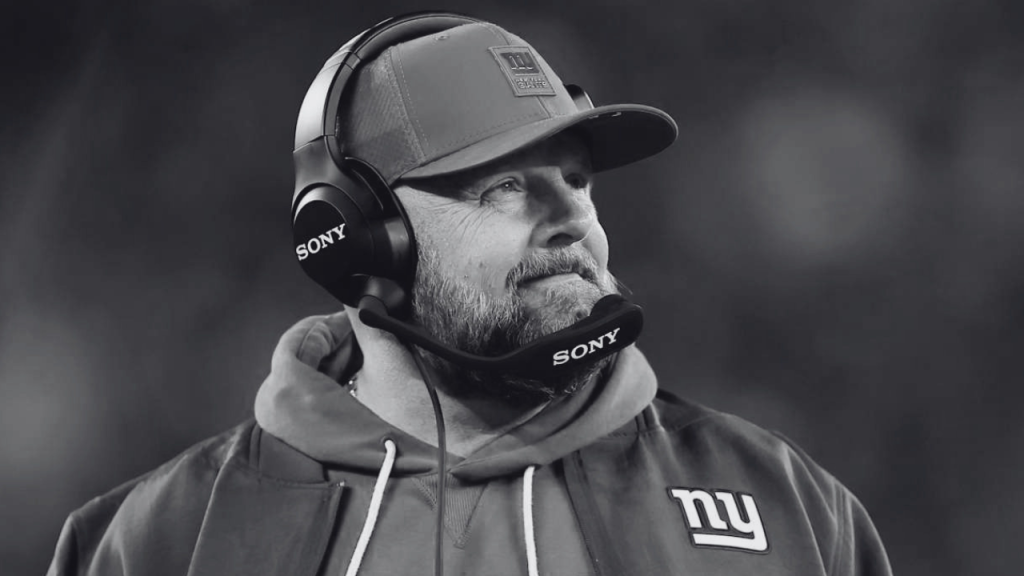
So naturally, you’d think the Titans — with new offensive coordinator Brian Daboll and a tight end room that got a real upgrade this offseason — would be jumping on the bandwagon. Except Daboll’s offense doesn’t really work that way, and this year’s roster isn’t built for it either. Let’s get into what the numbers actually show, whether stacking tight ends even helps you score more, and what it means for Tennessee.
11 Personnel: Where a lot of teams still live
One running back, one tight end, three receivers — that’s 11 personnel, and it’s still the bread and butter for almost everyone, usually 60-80% of snaps in a normal game. The Cowboys ran it more than any team in football last year, racking up almost 4,900 yards and 22 touchdowns out of it, and they were also the most efficient team doing it, averaging 6.6 yards a play. On the flip side, the Ravens barely used it at all, which tracks with how run-heavy and multi-tight-end their whole offense was under Todd Monken.
12 personnel: Where things get interesting
This is the “two tight end” grouping, and it’s kind of the norm right now. Cleveland ran it more than anybody, but here’s the catch — just because you run something a lot doesn’t mean you’re good at it. Three of the five teams that used 12 personnel the most last season actually finished outside the top 20 in efficiency doing it. Meanwhile Atlanta, which didn’t run it nearly as often, was arguably the best team in football at it — second-best efficiency in the league, most yards, and a ridiculous 49 explosive plays. Bijan Robinson and Kyle Pitts give them so much flexibility that defenses genuinely can’t tell what’s coming.
13 Personnel: The Rams basically started this whole trend
Thirteen personnel — three tight ends on the field — is the offensive style everyone’s talking about, and that’s the Rams’ fault. They ran it seven times in 2024. Seven. Last year? 388 times, nearly a third of their offensive snaps, roughly triple the next closest team. And it wasn’t just a gimmick — it worked incredibly well. Their efficiency out of 13 personnel was nearly five times better than the second-best team in football, and Matthew Stafford completed almost 70% of his passes out of it for 20 touchdowns. The kicker is why they did it: their receivers behind Puka Nacua and Davante Adams were pretty thin, but their tight end room was loaded, so it just made more sense to put a third tight end out there than a mediocre third receiver.
Does stacking tight ends actually help you score? Sort of, but it’s not automatic. The Rams and Falcons prove it can be devastating when you have the right pieces. Cleveland for example ran a ton of 12 personnel without much to show for it. Plus, that stat about most high-volume 12 personnel teams not even cracking the top 20 in offensive efficiency tells you the grouping itself isn’t magic. It only works if your tight ends can actually do two things at once — block well enough that the defense has to respect the run, and also be real receiving threats so the defense can’t just sell out against the run every time there are multiple tight ends on the field. If a team is running heavy personnel because their receivers aren’t good, or because their tight ends can only block and can’t catch, it usually just looks like they’re trying to hide a weakness, and it shows up in the numbers.
Where that leaves Tennessee
This is what makes the Titans worth watching. Under the old coaching staff last year, Tennessee ran 12 personnel on barely 16% of snaps. Daboll’s Giants offense ran it at almost double that rate. Some of that gap comes down to who was on the field — last year’s tight end room had rookie Gunnar Helm next to Chig Okonkwo, who was a beast after the catch but genuinely one of the worst blocking tight ends in the league. So if both of them were out there, defenses could basically bet on a pass every time. There was no disguise to it.
That’s changed heading into 2026. Okonkwo left in free agency, and the Titans went out and paid Daniel Bellinger — someone Daboll already knows well from their years together with the Giants — to come be his TE2. Bellinger can actually block and still catch the ball, and he’s pairing with Helm who’s reportedly spent this offseason specifically working on his blocking technique heading into year two. For the first time, Tennessee has two tight ends who can legitimately do both jobs, which is really the only reason to run more 12 personnel in the first place.
That said, don’t expect the Titans to chase the Rams into full-on 13 personnel mode. They just don’t have the depth at tight end for that — Bellinger and Helm are solid, but after those two the room drops off fast. A bump toward Daboll’s old Giants numbers in 12 personnel? Sure, that tracks. Trying to be the next Rams with three tight ends on the field regularly? Not really realistic with this roster.
The more interesting move might be Wan’Dale Robinson. If Tennessee isn’t going to fully join the heavy-personnel party, their better play might be doing the opposite of everyone else. That’s where Wan’Dale Robinson comes in. He signed a four-year, $70 million deal this offseason to reunite with Daboll, who coached him for four years in New York. Last season was his best yet — 92 catches, over 1,000 yards, and he actually led all receivers in the league in yards out of the slot, ahead of guys like Amon-Ra St. Brown and Puka Nacua.
Robinson is 5-foot-8, 185 pounds, so he’s obviously not winning with size. He wins with quickness and the ability to separate in a hurry. And that skill set happens to be a pretty direct counter to what’s happening around the league right now. As more offenses go heavy with tight ends, defenses are responding by keeping bigger, run-stopping linebackers on the field longer to match up. Those guys are built to handle tight ends coming off the line, not to chase a shifty slot receiver around in space. Put Robinson against a linebacker in that spot and it’s a mismatch almost every time — basically the opposite of what teams going heavy on tight ends are trying to create. With Carnell Tate, Calvin Ridley, and Elic Ayomanor drawing coverage on the outside, Robinson should get a steady diet of exactly that look underneath.
So what’s the takeaway?
The tight end trend is real, and for teams built to run it — the Rams, the Falcons — it’s paying off big time. But it’s not a cheat code. It only works with the right personnel, and a lot of teams running it in volume aren’t actually getting much out of it. Tennessee’s upgraded tight end room should let them lean into 12 personnel more under Daboll, but this roster was never going to be the next Rams-style 13 personnel team, and honestly it doesn’t need to be. The more interesting story in Nashville might be Wan’Dale Robinson quietly picking apart defenses that are getting bigger and slower to deal with everyone else’s tight ends — while the Titans zag right past them.
This article was researched and written by Tucker Lovell.
Elsewhere on the SoBros Network: Check out Stacking The Inbox for premium coverage of the Tennessee Titans and NFL Draft. Subscribe to Nashville Movie Dispatch for all of our movie content. We get weird on Phone It In, the history podcast that explores legendary tales, important historical figures, and events.